




Reopening the Strait of Hormuz: Iran’s Strategic Move Ahead of Islamabad Summit
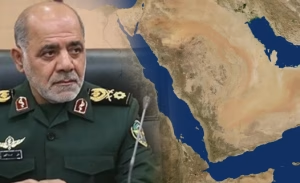
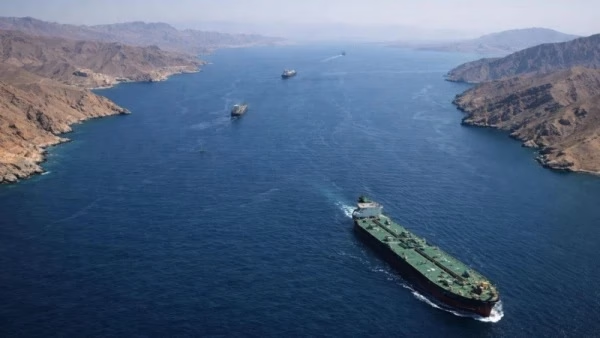
In a move to signal its commitment to the newly brokered ceasefire, a senior Iranian official has confirmed that the Strait of Hormuz will be reopened for international maritime traffic by this Thursday or Friday.
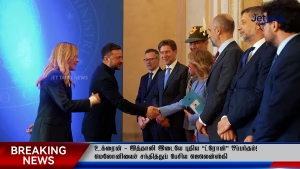
The decision comes just days before high-level delegations from the United States and Iran are set to meet in Islamabad, Pakistan, for a pivotal peace summit. The reopening is seen as a key “goodwill gesture” included in the 14-day ceasefire framework mediated by Pakistani leadership.
Strategic and Economic Implications
- Maritime Safety: Iran’s military and naval forces have reportedly established a coordinated security protocol to ensure the safe passage of commercial vessels, particularly oil and gas tankers, through the vital waterway.
- Global Energy Stability: The closure of the Strait during the peak of hostilities sent global energy markets into a tailspin. Analysts expect that the resumption of traffic will lead to a significant stabilization of crude oil prices.
- Conditional Permanence: Iranian officials have clarified that while the opening is immediate, its permanence depends entirely on the success of the Islamabad negotiations. If the 14-day dialogue produces a viable peace roadmap, the Strait will remain open indefinitely.